
Architectural notebook · Oriol Valls
Stone, light and hyperboloids: a mason’s notebook
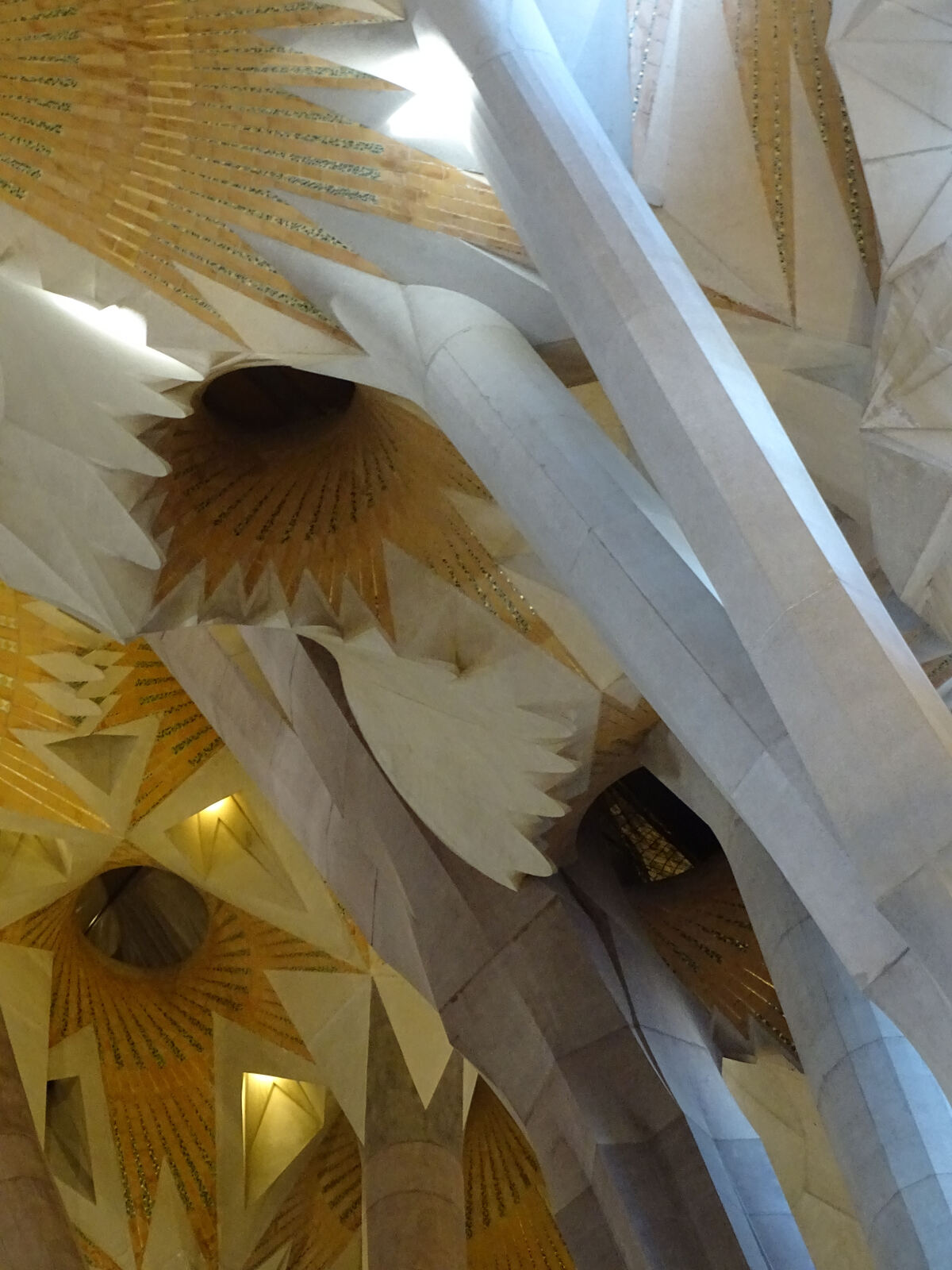
Oriol Valls observes the tree-column nave, tower masonry and changing stained-glass light of the Eixample basilica.
| Focus | Nave | Nativity tower | Passion tower |
|---|---|---|---|
| Best for | Structure and coloured light | Ornament and eastern views | Sculpture and western views |
| Physical demand | Mostly level access | Lift plus spiral descent | Lift plus spiral descent |
| Preferred light | Morning or late afternoon | Morning | Late afternoon |
From Carrer de Provença, my usual walk toward the basilica takes long enough to leave the everyday street behind and short enough to make the first view feel slightly unreal. The eighteen-spire temple on Carrer de Mallorca rises above ordinary Eixample blocks, but my notebook is concerned with smaller things: the turn of a shaft, a joint in a spire, and the colour that reaches one stone before another.
I have sketched here for nineteen years, first as a stone-draughtsman and later as a masonry conservation lecturer. The pages are not a substitute for standing in the nave. They are an invitation to look more carefully once you arrive. Start with the tree-column structure, then choose between the Nativity and Passion elevations, and finally give the stained glass enough time to change.
The central nave is my recommendation for understanding how the building works. A Nativity tower ascent adds ornamental detail and an eastern city view; a Passion tower ascent gives a sharper west-facing contrast. Both involve a long spiral descent, so neither should be treated as a casual extra for every visitor.
Light is the other reason to return. Morning often draws blue and green across the eastern side, while late afternoon can ignite the warmer west glass. Weather and season alter that simple rule, which is why I record the hour beside every sketch.
Use this notebook as a quiet companion rather than an official guide. It is independent, contains no booking service, and does not process payments. Read the practical notes, check conditions on the day, and leave space for your own observation. The building is generous to anyone willing to stop for five minutes.
The sidebar checklist follows the same principle: comfortable shoes, charged phone, earphones, appropriate clothing and a realistic expectation of the tower stairs. None of those items is as memorable as a vault, but each one removes a small distraction. With the practical details settled, you can stand beneath a column and notice how the building actually fits together.
A note on using these pages: the observations are written for general readers rather than as a technical conservation manual. Conditions can change with weather, restoration work and the daily life of the building. That is why I prefer describing a method of looking to promising a fixed spectacle. Stand still, compare one detail with its neighbour, and let the structure explain itself. If staff give a direction on the day, follow it. If your own experience differs from a note here, treat that as useful new evidence rather than a failure of the visit. An independent notebook should make attention easier, not turn architecture into a rigid script.